
Anthony and Merle Step
Greetings from South Africa
Dr Alexey Rykunov, MD
Head of Trauma and Orthopedics department
Global Medical Systems
Moscow, Russia
Greetings from South Africa,
Head of Trauma and Orthopedics department
Global Medical Systems
Moscow, Russia
Greetings from South Africa,
This is a follow up to our recent stay at GMS where my wife Merle Step had a complete Hip replacement by you recently.
She stood up to the return trip to South Africa very well and is able move around with the aid of a walker without difficulty. I took her to our local General Practitioner on Friday, with all your reports and X-Ray plates. He commented that he was very happy with the excellent procedures that you carried out and felt that she was in excellent professional hands while at GMS. He has referred her to an orthopedic surgeon for a final checkup and stitch removal. Also she is to go to Physo for further manipulation.
From both of us we cannot express our gratitude enough for the professional service, helpful administrative as well as nursing staff that attended to our needs while at GMS. We will always look back and always remember the Russian people for their friendly assistance to two complete strangers from another part of the world. In turn Russia will always be in our hearts and we will be good Ambassadors for your great country and federation.
Please pass on our greetings and thanks to a few that I remember by names, if I have left anyone out I apologies.
Irina Boeva Chief Medical Coordinator
Denis Sidorchuk Medical Coordinator
Ronnie Pangilinan Physo
We would like to take this opportunity to wish you every success in your chosen profession and GMS does get global worldwide recognition as an intuition of repute.
Best of luck
Anthony and Merle Step
She stood up to the return trip to South Africa very well and is able move around with the aid of a walker without difficulty. I took her to our local General Practitioner on Friday, with all your reports and X-Ray plates. He commented that he was very happy with the excellent procedures that you carried out and felt that she was in excellent professional hands while at GMS. He has referred her to an orthopedic surgeon for a final checkup and stitch removal. Also she is to go to Physo for further manipulation.
From both of us we cannot express our gratitude enough for the professional service, helpful administrative as well as nursing staff that attended to our needs while at GMS. We will always look back and always remember the Russian people for their friendly assistance to two complete strangers from another part of the world. In turn Russia will always be in our hearts and we will be good Ambassadors for your great country and federation.
Please pass on our greetings and thanks to a few that I remember by names, if I have left anyone out I apologies.
Irina Boeva Chief Medical Coordinator
Denis Sidorchuk Medical Coordinator
Ronnie Pangilinan Physo
We would like to take this opportunity to wish you every success in your chosen profession and GMS does get global worldwide recognition as an intuition of repute.
Best of luck
Anthony and Merle Step
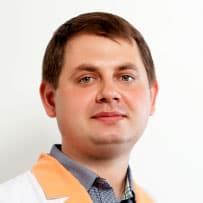
Alexey Rykunov
Orthopedic traumatologist, podiatr